
This is my final research paper and survey that I worked on in my public relations research course at Southern Miss.
I. Analyzing Organization
A. The Beginning of Carlsberg Breweries
I am doing my situational analysis on Carlsberg Breweries. In 1847, a man named J. C. Jacobsen owned the first commercial brewery in Copenhagen. He named the brewery Carlsberg after his son, Carl, and the hill or bjerg that the brewery was on. In 1875, Jacobsen started the first industrial research lab and became an innovator. Anything was discovered or researched there, was freely shared to the public and other researchers. J. C. Jacobsen was also known for lowest prices in the market. He always said, “I will make great beer regardless of immediate profit” (Carlsberg.com). He also started the Carlsberg foundation which supported the sciences. The Foundation pays dividends each year to promote science and art.
Carl Jacobsen, the son, studied the top-fermented British beers in France, Germany, Austria, and Scotland. In 1871, J.C. Jacobsen decided to give his son a new Carlsberg brewery location to run that would produce the ales and porters while the original would stick to lagers. Carl was ambitious like his father was and produced his own lager that competed with his dad’s. This led Carl to set up his own brewery, Ny or New Carlsberg, in 1882. His father took him to court and Carl won. Continuing to follow in his footsteps, Carl founded Ny Carlsberg Glyptotek or the New Carlsberg Foundation in Copenhagen to support the arts. In 1906, the two finally united to form Carlsberg Breweries as we know it today (Carlsberg.com).
B. The Science Behind Carlsberg
Beer has a science behind it, which J.C. Jacobsen recognized from the beginning. In 1883, Emil C. Hansen worked as a researcher on organisms in beer which included yeast. He discovered pure yeast cultures which made beer taste better and last longer. Previously, brewers were making “bad beer” by reusing beer to make new batches (Carlsberg.com) This was due to bacterial infection and also contamination by wild yeast. In November of 1883, Hansen named Carlsberg bottom yeast n. 1 which was used not only by Carlsberg Brewery, but all over the world. In 1902, Hansen was awarded for being one of the most influential pioneers in fermentation.
From 1907 to 1938, Søren P.L. Sørensen was the head of the Carlsberg Lab’s Chemistry Department. While there, Sørensen developed the pH scale and pioneered research on proteins, amino acids, and enzymes. Sørensen invented the pH scale in 1909, which measured the power of hydrogen in a substance on a scale of 0-14. This, of course, was shared with the world for other uses and it is still the global standard today
C. Research at Carlsberg Today
Carlsberg Breweries is still one of the leading breweries in research and is at the top of their industry. Erik Lund is currently the Master Brewer and is focusing on protecting the flavor of Carlsberg beers. In order to protect the flavor, he is testing new barley variants that stop beer from getting hazy over time, which means that the flavor will last longer. In other words, he is trying to improve flavor stability of Carlsberg beers. They have found that removing an enzyme and controlling the pH gives the beer more staying power as well (Carlsberg.com).
Birgitte Skadhauge is currently leading the research lab and is the Vice President of Carlsberg Group Research. She is attempting to reduce waste, lower water consumption and protect the environment in the production process. Skadhauge is currently breeding new barley types (non-GMO) to make climate smart and disease resistant crops. This will reduce the use of pesticides and in turn be safer for the environment, consumers and producers.
D. About Carlsberg Breweries Today
Carlsberg currently is selling thirteen different types of beers and operates 140 beer brands worldwide. It is the world’s fourth-largest beer company, and its top three competitors are Anheuser-Busch InBev or ABInBev, Heineken and Molson Coors. ABInBev is based out of Belgium and distributes “500 beer brands through a massive network of over 600 independent company-owned distributors and wholesalers nationwide” (Technavio 2020). Major Brands by ABInBev include Bud Light and Budweiser which are both major beer brands in the U.S. Heineken is based out of the Netherlands and is the number 2 brewer in the world and number 1 in Europe (Technavio 2020). Heineken sells more than 8.5 billion barrels of its beer in the U.S. and owns over 160 breweries in more than 70 countries. Molson Coors has 31 breweries and has over 90 partner brands in more than 50 countries (Technavio 2020). It is the second-largest beer company in the U.S. due to MillerCoors and SABMiller.
E. SWOT Analysis
| Strengths Carlsberg Adopt-A-Keg Campaign Innovative Environmentally conscious Wide variety of beers Leading brewery in research | Weaknesses Not well-known in the U.S. Primarily advertise to men |
| Opportunities Market to the U.S. Create longer lasting beer Data from Adopt-A-Keg campaign | Threats 4th largest beer company in the world Top companies are popular in the U.S. and other countries COVID-19 effects on beer sales |
F. Strengths
The Carlsberg Adopt-A-Keg campaign is a strength because within the first 48 hours of launching the campaign, more than 2,000 virtual kegs were created and by June of 2020, 10,000 kegs were created. This increased off-trade sales and impacted customer satisfaction in the short-term and long-term with the chance to receive free beers in the future.
Carlsberg Breweries is one of the most innovative breweries and has been from its start in 1847. Carlsberg was the first commercial brewery in Copenhagen and remains a major beer company for its innovative recipes and technology.
Carlsberg is environmentally conscious and their top researcher, Birgitte Skadhauge is attempting to reduce waste, lower water consumption and protect the environment. Skadhauge is currently breeding new barley types (non-GMO) to make climate smart and disease resistant crops. This will reduce the use of pesticides and in turn be safer for the environment, consumers, and producers.
Carlsberg has a variety of beers that it offers which means that their market is not limited. They currently sell thirteen different types of beers and operate 140 beer brands worldwide. This puts them high up in the beer industry.
From the beginning, Carlsberg Breweries has been a leader in research and started the first industrial research lab in 1875. In 1883, Emil C. Hansen worked as a researcher on organisms in beer which included yeast. He discovered pure yeast cultures which made beer taste better and last longer. Hansen named Carlsberg bottom yeast n. 1 which was used not only by Carlsberg Brewery, but all over the world. At the Carlsberg labs, Søren P.L. Sørensen invented the pH scale in 1909, which measured the power of hydrogen in a substance on a scale of 0-14. This, of course, was shared with the world for other uses and it is still the global standard today.
G. Weaknesses
Based on my survey responses, most people in America are not aware of Carlsberg beers or have heard of it but have not drunken a Carlsberg beer before. Also, my survey showed that 26 out of 31 participants did not know of the Adopt-A-Keg Campaign. This means that Carlsberg is missing the mark when it comes to their American audience.
Carlsberg’s demographics are male-dominated, and their target audience is 80% men. This means that they are missing out on all the women that drink beer and women tend to drink fruitier beers such as sours and ciders. Approaching a female audience could increase sales and allow them to create new beers to add to the market.
H. Opportunities
Since Carlsberg Breweries is based out of Germany, its primary market is Europeans. The Adopt-A-Keg campaign slogan was “Help Denmark’s Bars Come Back Stronger” not help all bars come back stronger. This campaign could have been applicable anywhere because COVID-19 had the same effect on bars all over the world. They could easily alter the campaign to the U.S. and boost their sales and brand awareness while helping out bars and restaurants.
Carlsberg Breweries slogan is “Possibly the best beer in the world” and Erik Lund, the current Master Brewer, is ensuring that. To protect the flavor, he is testing new barley variants that stop beer from getting hazy over time, which means that the flavor will last longer. They have found that removing an enzyme and controlling the pH gives the beer more staying power as well.
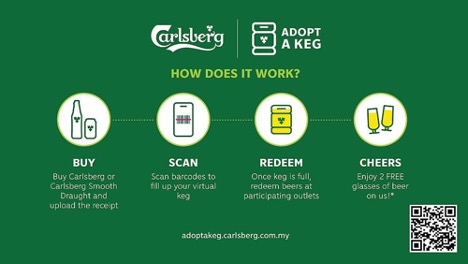
The Adopt-A-Keg campaign not only increased sales, it also was an easy way to collect consumer data. Each time someone bought Carlsberg beers at the store they could scan the can and fill up their virtual keg. The virtual kegs tracked all of the beers and researchers can look at that data to see which beers consumers prefer and what types of consumers prefer what types of beers.
I. Threats
While Carlsberg Breweries has been around for a long time and is a major beer company, it is only the fourth largest in the world. Competitors including Anheuser-Busch InBev or ABInBev, Heineken and Molson Coors are all ahead of Carlsberg. This is a threat because they are ahead of other beer companies but not in the lead and need to expand their markets.
Another threat and the reason Carlsberg Breweries is the fourth largest is because the top competitors all have major markets in the U.S. while Carlsberg does not. This gives the competitors an advantage because it increases revenue and broadens their market.
When the COVID-19 pandemic hit, Carlsberg noticed a 6.8% decline in the first quarter of 2020. They also saw a 7.4% decline in organic revenue with a 7.6% decline in total volume. Their net revenue for 2020 was DKK 12.9 billion or $1.88 billion compared to DKK 13.9 billion or $2 billion from the year before.
J. Positioning Map
K. Breakdown of Positioning Maps
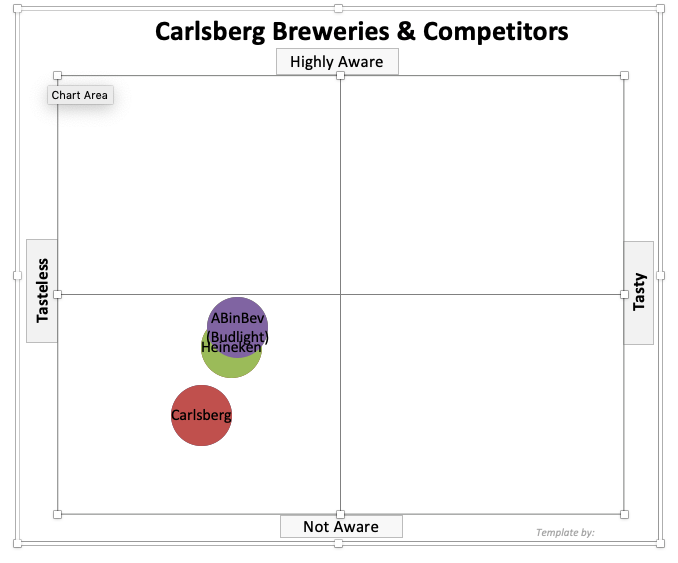
The positioning map above depicts Carlsberg Breweries, ABinBev (Budlight), and Heineken. I want to focus on my client, Carlsberg Breweries, and their brand awareness and quality of beer. The variables I asked about in my survey included tastiness and awareness. Based on my survey population, all three fell in the quadrant of not aware and tasteless. However, Budlight was ranked the best and Carlsberg was rated the worst. The positioning map tells me that my client should work on the flavors of their beers and overall brand awareness.
II. Analyzing Public
A. Campaign Success
Within the first 48 hours of launching the campaign, more than 2,000 virtual kegs were created. By June of 2020, 10,000 kegs were created (Contagious). When COVID-19 hit, suddenly off-trade sales increased, and on-trade sales were wiped out. Carlsberg Breweries saw this and altered their target audience. In normal times, Carlsberg’s primary target audience would be beer drinkers at bars, who want “probably the best beer in the world” (Carlsberg.com). The pandemic shifted the target audience towards bartenders and beer drinkers who are bored and stuck at home due to the lockdown. This campaign also impacted customer satisfaction in the short-term and long-term which ultimately drove up sales. The campaign ultimately “connected Carlsberg’s ecosystem” (Grey Group 2021).
The public wanted to be able to go out and enjoy a cold beer with friends. Due to the pandemic, they were able to enjoy a beer at home but also could enjoy a beer with friends for free after lockdown was over. This peaked the public’s interest because they could do what they want for free, and everyone loves a free product. The consumers could have something to look forward to and help jump start the industry once lockdown was over.
B. Carlsberg Breweries Audience
The companies target audience is 80% men and “Carlsberg uses AI in a taste sensor platform to quickly distinguish between different flavors developed in their laboratory” (Meier, 2018). Carlsberg’s demographics are male-dominated and include legal drinking age, depending on which country, and older. Psychographics allow Carlsberg to look at buying patterns, consumer behavior and more. Psychographics led this campaign, because it showed that people wanted to enjoy a beer and were stuck at home. By analyzing the cans that were scanned, Carlsberg could also tell which type of beer each consumer preferred. This allowed the brewery to alter the amount and which type of beer they sold in stores and in bars when they opened back up.
The Adopt-A-Keg campaign ended up being extremely successful with the help of TV and social media. Carlsberg Breweries has always been an innovative company and continues to be innovative and make huge impacts on their consumers.
III. Analyzing the Situation
A. The Effects of COVID-19 on Beer Sales
When the COVID-19 pandemic hit, restaurants and bars were brutally impacted. On a global scale, bars were shut down and restaurants were shifted to curbside or shut down all together. Because of this, Carlsberg noticed a 6.8% decline in the first quarter of 2020 (FoodBev Media 2020). They also saw a 7.4% decline in organic revenue with a 7.6% decline in total volume. Their net revenue for 2020 was DKK 12.9 billion or $1.88 billion compared to DKK 13.9 billion or $2 billion from the year before (FoodBev Media 2020).
B. The Carlsberg Adopt-A-Keg Campaign
The company saw a serious decline that would only get worse if they did not think fast. The goal of the Adopt-A-Keg campaign was to “mitigate the sales loss in the short term when most consumers were in lockdown, while helping to secure the long-term health of the brand” (Grey Group 2021). Essentially, consumers could buy Carlsberg in stores and scan a code to fill up a virtual keg. They could scan one can a day and once they scanned four cans in, the virtual keg was full. This meant that the consumer could receive two beers free at any participating location once bars and restaurants reopened. The slogan for the campaign was “Help Denmark’s Bars Come Back Stronger” (Contagious). The company partnered with Grey Europe and launched the TV advertisement, following up with social media push. The campaign was also supported by the Danish Bartender Association and 600 bars signed up to participate. With the Adopt-A-Keg campaign, in-store collateral helped drive conversion at point of purchase with incentive for consumers.
IV. Survey Findings
A. Survey Questions
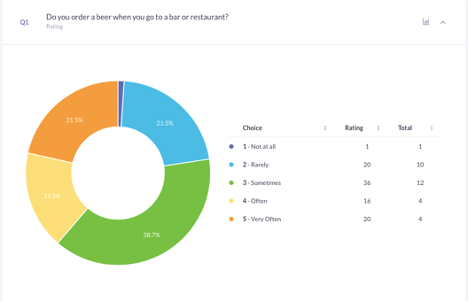
Do you order a beer when you go to a bar or restaurant?
- Not at all
- Rarely
- Sometimes
- Often
- Very often
- Survey Findings
- 38.7% of respondents said they order a beer sometimes, 21.5% said they order a beer very often and another 21.5% said they ordered a beer rarely. I found it interesting that the same amount of people said they order one often and the same amount said rarely. This means that my sample group was balanced. 1 person answered not at all and the last 17.2% said they order a beer often. So, most of the respondents do order beer at a bar or restaurant.
- Survey Findings
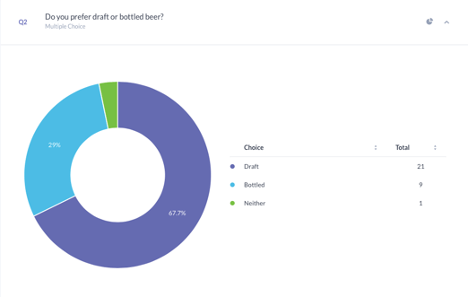
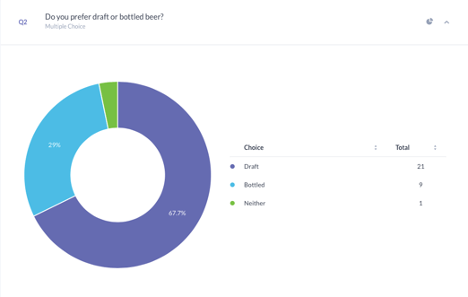
Do you prefer draft or bottled beer?
- Draft
- Bottled
- Neither
- Survey Findings
- One person preferred neither type of beer. 67.7% of respondents preferred draft beer while the other 29% preferred bottled. Therefore, the majority of respondents prefer draft beer which means they prefer beer from a keg poured into a glass.
- Survey Findings
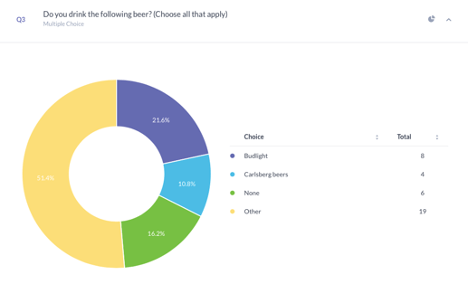
Do you drink the following beer? (Choose all that apply)
- Budlight
- Carlsberg beers
- None
- Other
- Survey Findings
- About half of the respondents (51.4%) drink a different beer than Budlight or Carlsberg. 16.2% said they don’t drink beer and 21.6% said they drink Budlight. Only a small portion of the respondents (10.8%) drink Carlsberg beers.
- Survey Findings
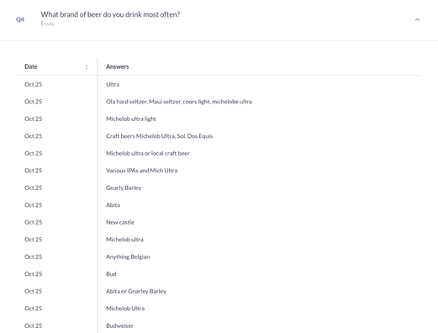
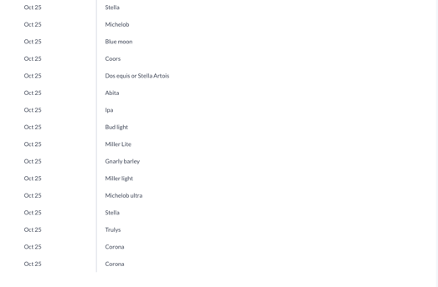
What brand of beer do you drink most often?
- Survey Findings
- 9 of the respondents drink Michelob Ultra. Other beers mentioned included Miller Lite, Stella Artois, Abita and various hard seltzers. None of the respondents listed Carlsberg beers as the beer they drink most often.
What style of beer do you prefer to drink?
- I don’t drink beer
- Lagers
- IPAs
- Stouts
- Sours
- Ales
- Survey Findings
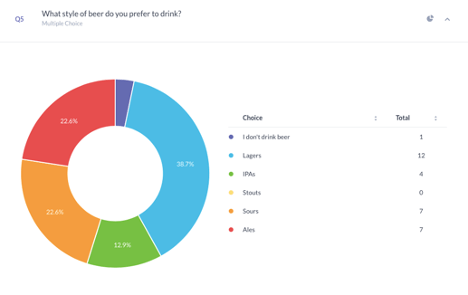
- One person said that they do not drink beer. 38.7% of the people responded that they prefer lagers, while only 12.9% of the people prefer IPAs which have a hoppy and bitter flavor to them. 22.6% of respondents prefer sours which are fruity, tangy beers and another 22.6% ales. This surprised me because I thought that lagers and ales were the most popular.
- Survey Findings
Is it important for your beer to last a long time without losing flavor or composition?
- Yes
- No
- I drink it too fast for it to matter
- I have no opinion
- Survey Findings
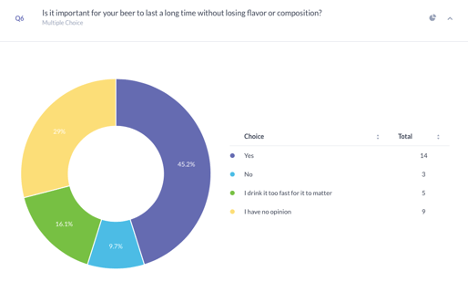
- 45.2% of respondents said that it is important for their beer to last a long without losing flavor or composition. 16.1% said they drink it too fast for it to matter. 29% had no opinion and 9.7% said that it didn’t matter. This means that slightly more people do not care about this aspect of beer, so it may not be worth Carlsberg Breweries time and money to put research into this.
- Survey Findings
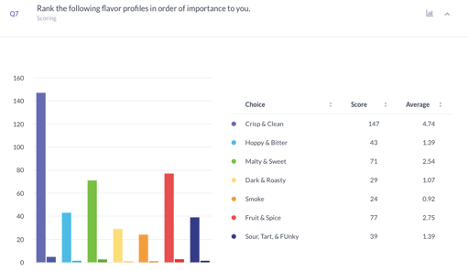
Rank the following flavor profiles in order of importance to you.
| Not important Extremely Important | |||||
| 1 | 2 | 3 | 4 | 5 | |
| Reset | |||||
| Crisp & Clean | |||||
| Hoppy & Bitter | |||||
| Malty & Sweet | |||||
| Dark & Roasty | |||||
| Smoke | |||||
| Fruit & Spice | |||||
| Sour, Tart, & FUnky |
- Survey Findings
- Based on the responses, the following flavor profiles are in order of most to least important:
- Crisp & clean
- Fruit & Spice
- Malty & Sweet
- Hoopy & bitter
- Sour, tarte, & funky
- Dark & roasty
- Smokey
This corresponds to the previous responses about the preferred style of beer. Lagers and ales are usually crisper and cleaner, while sours are in the fruity and sour categories.
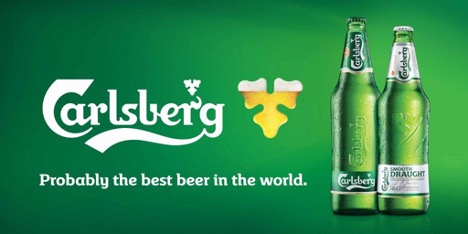
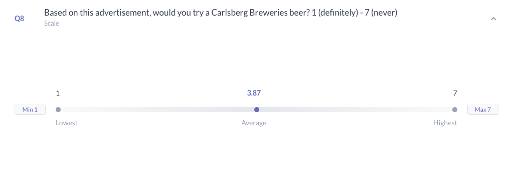
Based on this advertisement, would you try a Carlsberg Breweries beer? 1 (definitely) – 7 (never)
Value Scale
- Survey Findings
- Based on the Carlsberg ad, most of the respondents averaged in the middle range around 3.8. This means that there is a high possibility that the respondents would try Carlsberg beers.
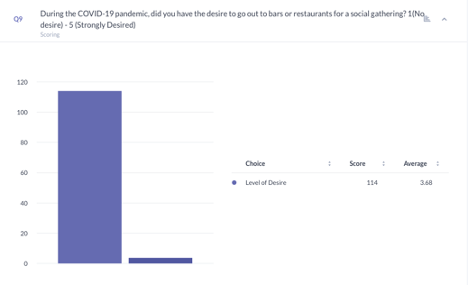
During the COVID-19 pandemic, did you have the desire to go out to bars or restaurants for a social gathering? 1(No desire) – 5 (Strongly Desired)
Top of Form
| 1 | 2 | 3 | 4 | 5 | |
| Level of Desire |
- Survey Findings
- 13 of the 31 respondents said they strongly desired to go out during COVID-19. Majority of the respondents had some level of desire to go out for a social gathering during the pandemic but could not. This meant that there was an opportunity for breweries such as Carlsberg to cater their advertising to the people stuck at home who buy alcohol from the stores that are open.
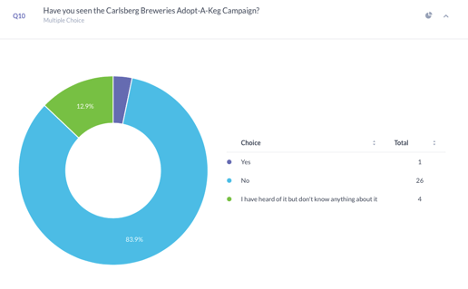
Have you seen the Carlsberg Breweries Adopt-A-Keg Campaign?
- Yes
- No
- I have heard of it but don’t know anything about it
- Survey Findings
- The vast majority (83.9%) had not seen the Adopt-A-Keg Campaign. Only one person had seen it and four people had heard of it but knew nothing about it. This means that Carlsberg Breweries is not reaching their audience in the U.S. and they are missing that entire market that likes beer but has not had theirs.
- Survey Findings
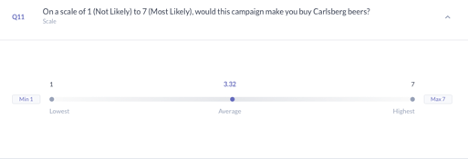
On a scale of 1 (Not Likely) to 7 (Most Likely), would this campaign make you buy Carlsberg beers?
Value Scale
- Survey Findings
- Based on the campaign, most of the respondents averaged around 3.3. Eight of the 31 respondents picked 3 which means the campaign had little influence in my respondents.
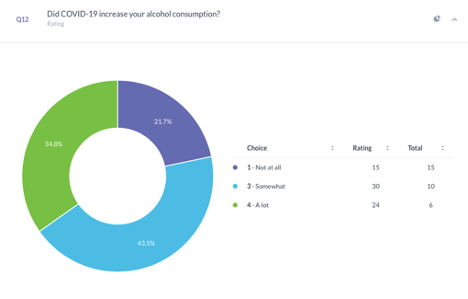
Did COVID-19 increase your alcohol consumption?
- Not at all
- Somewhat
- A lot
- Survey Findings
- According to survey results, 43.5% of respondents said that COVID-19 somewhat increased their alcohol consumption. 34.8% said that COVID-19 increased their alcohol consumption a lot. 21.7% said that COVID-19 did not increase their alcohol consumption. While it wasn’t the majority, there were still a lot of respondents that increased their alcohol consumption during the pandemic.
- Survey Findings
Can you rate the following product on 1 (Tasty) to 5 (Tasteless)?
| 1 | 2 | 3 | 4 | 5 | |
| Reset | |||||
| Carlsberg Danish Lager (Pilsner) | |||||
| Heineken Pale Lager | |||||
| ABinBev Budlight Light Lager |
Top of Form
Bottom of Form
- Survey Findings
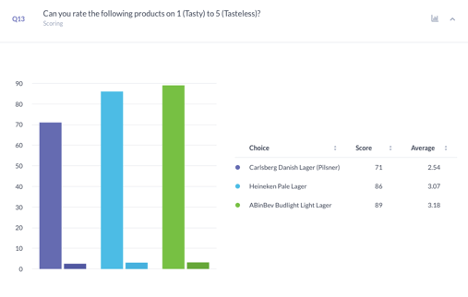
- According to my findings, Carlsberg scored a 71, Heineken scored an 86 and Budlight scored an 89. My findings tell me that Carlsberg should be focusing on the flavor of their beer to increase sales.
Can you rate the following product on brand awareness 1(Not Aware at All) to 5 (Highly Aware)?
Top of Form
| 1 | 2 | 3 | 4 | 5 | |
| Reset | |||||
| Carlsberg Breweries | |||||
| Heineken | |||||
| ABinBev (ex. Budlight) |
- Bottom of Form
- Survey Findings
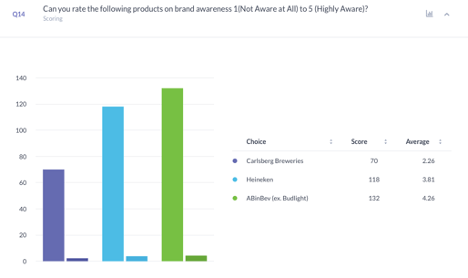
- According to my findings, Carlsberg got a score of 70 for brand awareness, Heineken got a score of 118 and Budlight got a score of 132. Heineken and Budlight were significantly more recognized than Carlsberg so Carlsberg Breweries should be marketing more to their American audience.
Do you think a campaign like the Carlsberg Breweries Adopt-A-Keg campaign would increase beer sales in the U.S now? Why or why not?
- Survey Findings
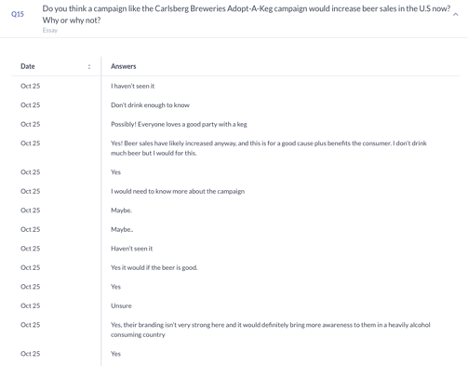
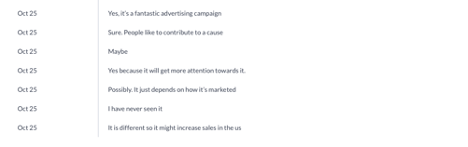
- Majority of the respondent said that would increase beer sales in the U.S. 10 of the 21 responses were yes and the other responses were maybe, so Carlsberg should try launching this campaign in the U.S., especially in states where mandates are still in effect.
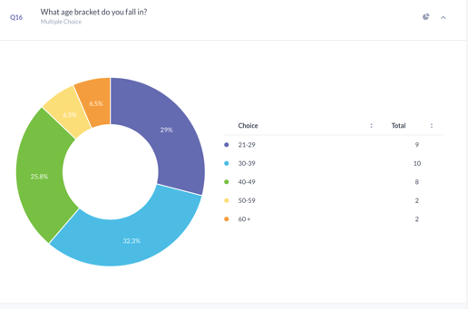
What age bracket do you fall in?
- 21-29
- 30-39
- 40-49
- 50-59
- 60 +
- Survey Findings
- Majority of the respondents were 21-39 and the second largest age bracket was 40-49. This tells me that Carlsberg Breweries should be targeting their advertisements and campaigns to young and middle-aged adults.
- Survey Findings
What is your ethnicity?
- Caucasian (White)
- African American
- Latino or Hispanic
- Asian
- Pacific Islander
- Other
- Survey Findings
- My survey may be skewed because 28 of the 31 respondents were white and then there were 2 Latino/Hispanic people and one Asian person. I should have gotten a more diverse sample group to remove any bias.
- Survey Findings
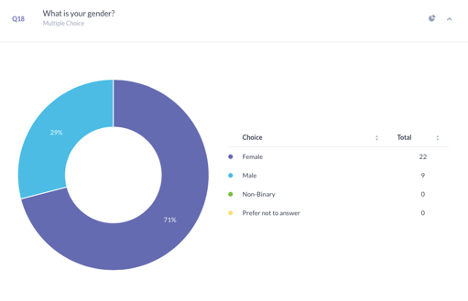
What is your gender?
- Female
- Male
- Non-Binary
- Prefer not to answer
- Survey Findings
- 71% of my respondents were female and 29% were male. Again, my sample group was skewed so I should’ve gotten a more diverse group of people.
- Survey Findings
Survey link: https://s.surveyplanet.com/921qil3e
- Implications and Suggestions
Based on my survey findings, I can infer that Carlsberg Breweries has a missed opportunity with their American audience. Everyone in sample group had either heard of Carlsberg but didn’t know anything about their beer or didn’t know the brand at all. My suggestion would be to create a campaign similar to the Adopt-A-Keg campaign and target it to legal drinking age adults in the U.S. This would especially work well for the states that still have mask mandates and restrictions in place for COVID-19. The one thing that I noticed as a difference between Carlsberg Breweries and its top three competitors is that all of the competitors catered to Europeans and Americans while Carlsberg only targets Europeans. They also have a missed opportunity by having a male-dominated consumer base. If they created some beers that were more appealing to women and included women in their advertisements, then they could widen their consumer base.
References
Carlsberg Adopt a Keg. Grey Group. A WPP Company. (2021, May 24). Retrieved September 21, 2021, from https://www.grey.com/en/work-detail/carlsberg-adopt-a-keg.
Carlsberg rewards lockdown drinkers with future pub pints. Contagious. (n.d.). Retrieved September 21, 2021, from https://www.contagious.com/news-and-views/carlsberg-lets-lockdown-drinkers-adopt-a-keg.
Carlsberg’s beer sales hit by coronavirus with 7% decline. FoodBev Media. (2020, April 30). Retrieved September 21, 2021, from https://www.foodbev.com/news/carlsbergs-beer-sales-hit-by-coronavirus-with-7-fall-in-revenue/.
Meier, S. (2018, June 11). Beer brands chugging along with ai psychographics. Medium. Retrieved September 22, 2021, from https://medium.com/kung-fu/beer-brands-chugging-along-with-ai-psychographics-16030833f282.
Technavio. (2020, June 25). Top 10 largest beer companies in the World 2020: Top beer brands. Technavio. Retrieved September 21, 2021, from https://blog.technavio.com/blog/top-companies-global-beer-market.
Www.wwwcarlsberg.com. http://www.wwwcarlsberg.com. (n.d.). Retrieved September 21, 2021, from http://www.wwwcarlsberg.com/.
 Vivienne Cookmeyer